



PB122S WH
DuPont™ ProShield® 10
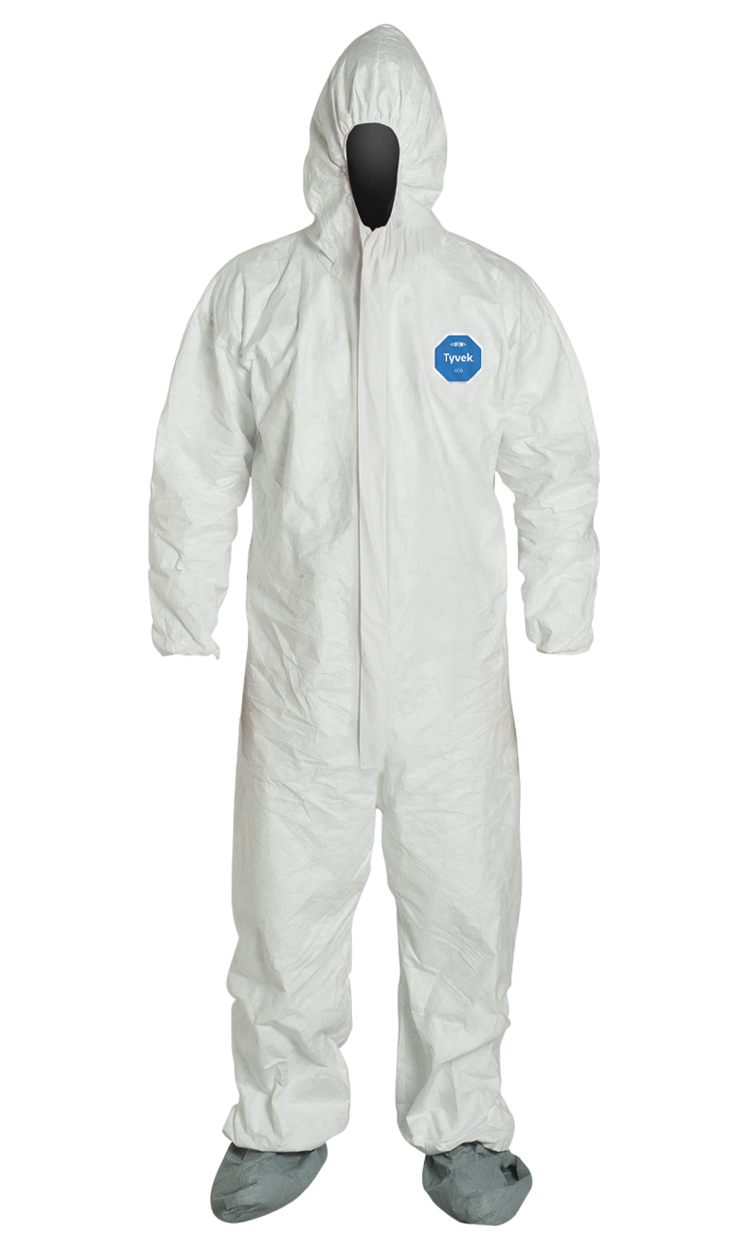
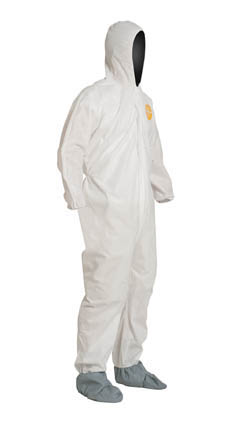
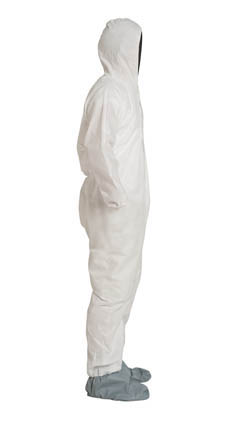
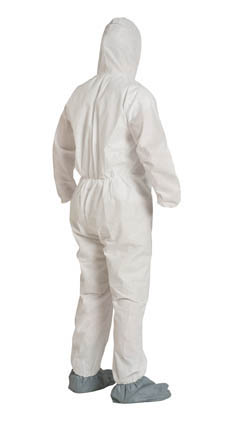
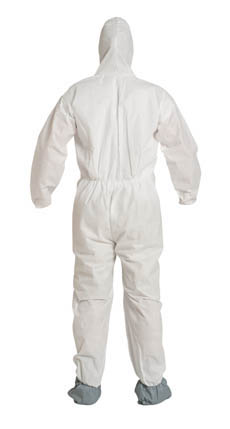
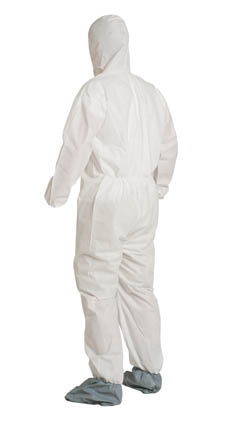
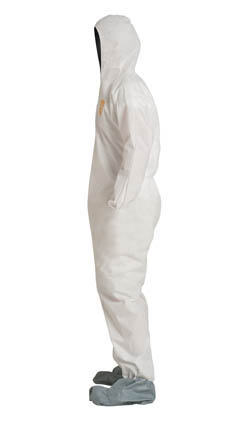
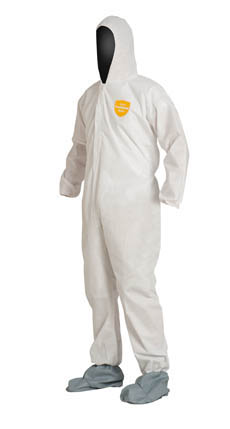
DuPont™ ProShield® 10 Hooded Coverall with Attached Boots. Economical protection offering comfort and breathability. This white coverall features a standard hood, attached skid-resistant boots, and a pin lock slider zipper pull. Suitable for janitorial, sanitation, and light industrial applications.

The following information must be read and accepted by the user before proceeding.
The DuPont™ SafeSPEC™ Product Selector Tool (“Tool”) is intended to assist in choosing protective clothing styles for particular applications and does not replace the judgment of a qualified safety professional or industrial hygienist. Additional personal protective equipment (“PPE”), such as but not limited to: respiratory, eye, head, foot, and hand protection, may be required. Supplying the proper hazard/chemical and exposure information for your hazard scenario is critical in order to obtain suggestions of possible garment options for your consideration. Inaccurate information could result in improper suggestions. Since there are other factors involved which could affect the final PPE decision and may not be considered in this Tool, the final decision on protective clothing selection is the responsibility of the buyer, safety professional, industrial hygienist and end-user. DuPont de Nemours, Inc. or its affiliates DISCLAIM ANY RESPONSIBILITY OR LIABILITY FOR ANY INFORMATION OR SUGGESTIONS PROVIDED BY THE TOOL OR THE USE THEREOF.
There are uses, environments and chemicals for which any garment will be unsuitable. It is the responsibility of the user to review available data and verify that the garment selected is appropriate for the intended use and meets all specified government and industry standards.
1 Choose Hazards
1 Enter
Chemicals
2 View Permeation Data
2 View
Data
3 View Matching Products
3 View
Products
Step 1 of 3
You may enter from one to five chemicals or other hazards that may be present in your working environment. Our tool will find the best product match for the combined hazards. Enter a single chemical or hazard if you wish to find the best possible product match for that one hazard.
Chemical or Other Hazard Name
or
CAS Number
| Chemical Details | CAS | Actions |
|---|
1 Choose Hazards
1 Enter
Chemicals
2 View Permeation Data
2 View
Data
3 View Matching Products
3 View
Products
Step 2 of 3
The table below shows the Normalized Breakthrough times of fabrics for the hazards selected. (Testing Details) You can find specific garments that protect against these hazards by clicking the 'Next' button below.
Done
Done
Done
 TYVEK
TYVEK
|
TYCHEM
|
GLOVES
|
||||||||||
|---|---|---|---|---|---|---|---|---|---|---|---|---|
1 Choose Hazards
1 Enter
Chemicals
2 View Permeation Data
2 View
Data
3 View Matching Products
3 View
Products
Step 3 of 3
If any of the following apply:
Please consider fire fighter PPE (personal protective equipment). Read more.
If none of these conditions apply but FR clothing is required in your working environment, close this box and proceed to the next question. Only fabrics that provide both chemical resistance to the hazards you have listed and protection during escape from a flash fire will be considered for your hazard scenario.
1 Choose Hazards
1 Enter
Chemicals
2 View Permeation Data
2 View
Data
3 View Matching Products
3 View
Products
step3of3
 Is Suitable For Hazard Scenario
 Is Not Suitable For Hazard Scenario
| Hazard | Fabric/Materials | Seam | Design |
|---|

Matching Products (0)
Your hazard scenario did not produce any results. May we suggest:
If you still need help, please Contact Us.
For a general fabric overview, please view our
Is Suitable For Hazard Scenario Is Not Suitable For Hazard Scenario
| Hazard | Fabric/Materials | Seam | Design |
|---|
For a general fabric overview, please view our
| PRODUCT DETAILS | |
|---|---|
| Full Part Number | PB122SWHxx0025yy (xx=size;yy=option code)  |
| Fabric/Materials | ProShield® 10 |
| Design | Coverall w/ Hood, Elastic Wrists, Att. Skid-Resistant Boots |
| Seam | Serged |
| Color | White |
| Quantity/Box | 25 per case |
| Sizes | SM, MD, LG, XL, 2X, 3X, 4X, 5X, 6X, 7X |
| Option Codes | 00 |
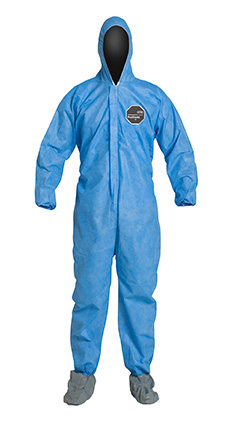
DuPont™ ProShield® 10 Hooded Coverall with Attached Boots. Economical protection offering comfort and breathability. This blue coverall features a standard hood, attached skid-resistant boots, and a pin lock slider zipper pull. Suitable for janitorial, sanitation, and light industrial applications.
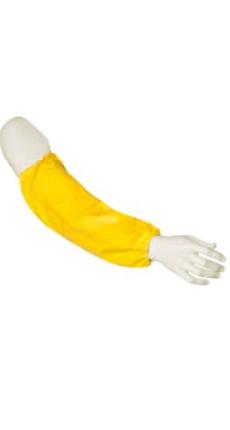
DuPont™ Tychem® 2000 Sleeve. Offers lightweight and durable protection against a variety of industrial chemical threats. Yellow, 18"" long sleeve features elastic at both ends for arm protection. Suitable for light liquid splash protection in industries such as chemical processing, petroleum refining, pharmaceutical manufacturing, and food processing.
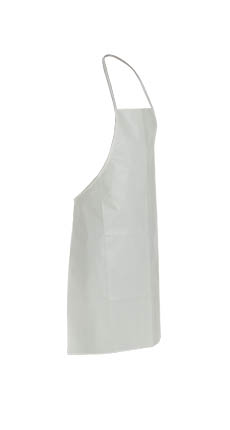
DuPont™ Tychem® 4000 Bib Apron. Offers rugged, durable frontal protection against a wide range of chemicals. White, 28"" x 43"" bib apron features a neck loop, ties at the waist, and taped seams. Suitable for a variety of applications, including hazardous remediation, nuclear environments, waste management, and chemical handling.
DuPont™ Tyvek® 400 Bib Apron. Robust frontal protection against fine particles and light liquid splash in a breathable, lightweight garment. White, 28"" x 36"" bib apron features a neck loop, ties at the waist, and bound seams. Suitable for a variety of applications, including maintenance, clean-up, laboratory, and food processing.
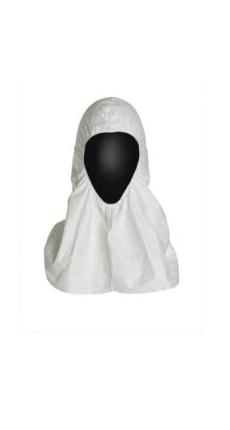
DuPont™ Tyvek® 400 Hood. Robust protection against fine particles and light liquid splash in a breathable, lightweight hood. White hood extends over shoulders and features an elastic face opening for fit around PAPR and serged seams. Suitable for a variety of applications, including remediation, laboratory, and spray painting.
DuPont™ Tyvek® 400 Hooded Coverall with Attached Boots. Robust protection against fine particles and light liquid splash in a breathable, lightweight garment. White coverall features a respirator fit hood, comfort fit design, elastic wrists and waist, attached skid-resistant boots, a storm flap, serged seams, and a pin lock slider zipper pull. Suitable for a variety of applications, including maintenance, remediation, spray painting, and general clean-up.
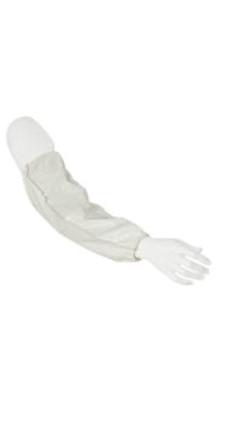
DuPont™ Tyvek® 400 Sleeve. Robust protection against fine particles and light liquid splash in a breathable, lightweight sleeve. White, 18"" long sleeve features elastic at both ends for arm protection and serged seams. Suitable for a variety of applications, including maintenance, remediation, laboratory, and general clean-up.
DuPont™ ProShield® 10, spunbond meltblown spunbond (SMS) garments, are made to the high quality standards you have come to expect from DuPont. ProShield® 10 garments have been optimized for comfort, softness and breathability while enabling you to cut costs for disposable garments
DuPont™ ProShield® 10 disposable garments are designed for workers in a range of industries for nonhazardous dry particle and light liquid splash applications. Garments are available in a variety of styles and colors, including white, blue and gray. Applications include: general maintenance, janitorial/cleaning and other dirty work.

Data relating to mechanical performance of the fabrics used in DuPont chemical protective clothing, listed for the selected garment according to the test methods and relevant European standard, if applicable. Such properties, including abrasion and flex-cracking resistance, tensile strength and puncture resistance can help in the assessment of protective performance.
| Property | Test Method | Typical Result |
|---|---|---|
| Thickness | ASTM D1117 | 12 mils |
| Basis Weight | ASTM D3776 | 1.3 oz/yd2 |
| Burst Strength - Mullen | ASTM D3786 | 31 psi |
| Tear Resistance - Trap Tear (MD) | ASTM D5587 | 4 lbf |
| Tear Resistance - Trap Tear (CD) | ASTM D5587 | 7 lbf |
| Breaking Strength - Grab (MD) | ASTM D5034 | 17 lbf |
| Breaking Strength - Grab (CD) | ASTM D5034 | 14 lbf |
| Hydrostatic Head | AATCC 127 | 25 inches H2O |
| Surface Resistivity (25°C / 55% RH) | ASTM D257 | 1 x 10^9 ohms/square |
| Wearing Apparel Flammability | 16 CFR 1610  |
Class 1 |